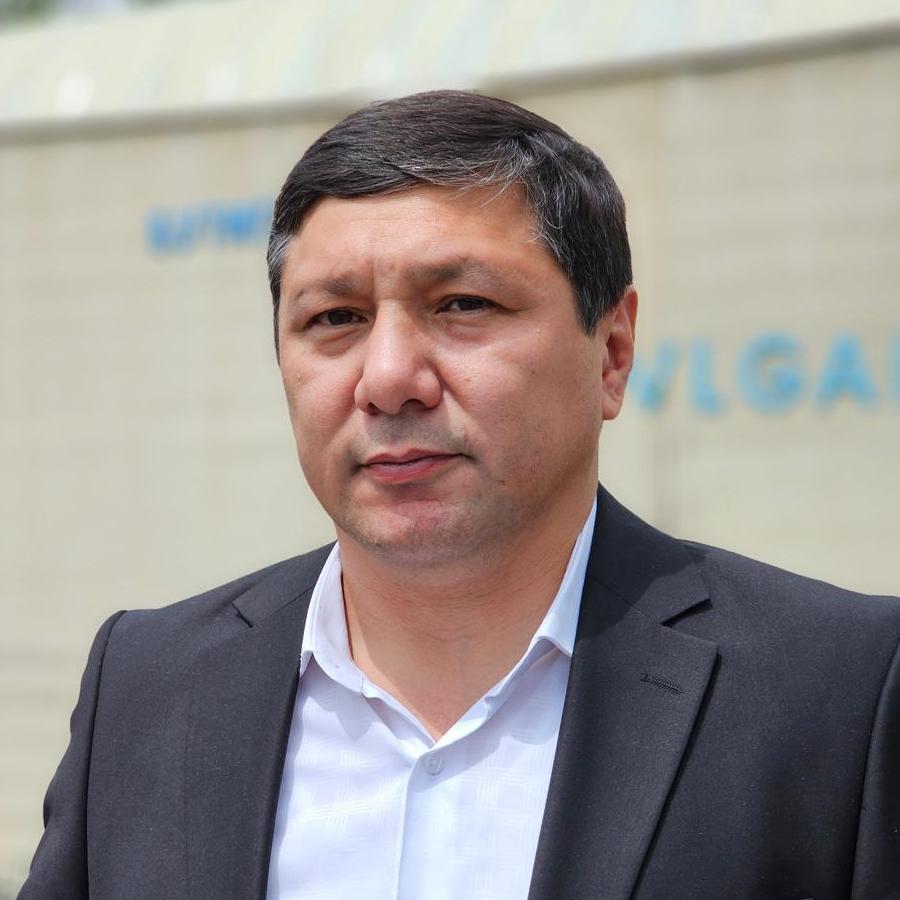
Professional experience 2005-2007 Teacher at the Almaty University of Technology and Business
2008-2015 Teacher, senior teacher, acting head of the Department of Computer Engineering and Information Systems at the Kazakh Academy of Transport and Telecommunications named after M. Tynyshpayev
2015-2016 engineer, a member of the research group of the grant funding project through the Ministry of Education and Science of the Republic of Kazakhstan at the Kazakhstan-British Technical University
2017-2018 Leading research fellow at the Institute of Information and Computational Technologies of the Scientific Research Institute of the Ministry of Education and Science of the Republic of Kazakhstan
2018-2019 Deputy dean for academic affairs at the Kazakh Academy of Transport and Telecommunications named after M. Tynyshpayev
2018-2020 Senior research fellow, member of the research group of two grant funding projects under the Ministry of Education and Science of the Republic of Kazakhstan, AR05131027 "Development of biometric methods and means of information security", AR05132044 "Development of a hardware-medical complex for assessing human psychophysiological parameters" at the Institute of Information and Computing Technologies of the Ministry of Education and Science of the Republic of Kazakhstan
2020-2021 Adviser to the general director of the Institute of Information and Computing Technologies of the Ministry of Education and Science of the Republic of Kazakhstan
2021-2023 Head of the department of "Radio Engineering, Electrical Engineering and Telecommunications" at Turan University
Education1997 - 2003 Semipalatinsk State University named after Shakarim. engineer technologist.
2009 - 2011 Kazakh Academy of Transport and Communications named after M. Tynyshpayev, Master. Information systems.
2015 - 2018 Al-Farabi Kazakh National University, PhD. Computer hardware and software.
2017 - 2017 Tallinn University of Technology, research internship. Computer hardware and software.
Scientific interests2022–2024 AP148051/0222 “Development of a telemetry system for high-speed combat aircraft” Project Manager for grant funding
Member of the research group for grant funding project AP05131027 “Development of biometric methods and means of information security”
Member of the research group for grant funding project AP05132044 “Development of a hardware-medical complex for assessing human psychophysiological parameters”
PublicationsHas more than 30 publications and articles in scientific journals
Disciplines taught
Various methods of modeling three-dimensional objects.Methods of texturing three-dimensional objects.Rules of placement of lighting sources in a three-dimensional scene.
Types of lighting sources, their characteristics.The basics of rendering three-dimensional scenes.
Methods for creating animation of three-dimensional objects and its preservation.
Principles of dynamic three-dimensional modeling.
The goal and objectives of the discipline are the acquisition of practical skills in the development of algorithms, the acquisition of practical skills in programming in a high-level language, the study of the basics of algorithmic problems and programming technologies in a basic procedural-oriented algorithmic language, mastering the skills of solving engineering problems using applied programs, as well as the skills of algorithmic and writing programs for solving problems in the subject area.
Learning outcomes: after completing the course, the student should know: basic concepts of the theory of algorithms; technology for the development of professional programs (algorithms), one or two working languages of object-oriented programming, the main types of software for modern computers for object-oriented programming, methodology of object-oriented analysis and design; be able to: use modern hardware, consistently solve the problems of developing effective data models and algorithms for their processing when creating applied software, as well as get software implementations in high-level languages, work with the Microsoft Visual Studio .NET programming system.
The purpose of the discipline is the formation of students' theoretical knowledge and practical skills in the field of Internet technology, the integration of local networks into the global telecommunications network Internet, data exchange protocols used on the Internet. The student acquires the skills of developing Internet resources using hypertext markup language, cascading style sheets, client and server scripting programming languages, organization of multimedia systems architecture, synchronization of processes and flows in Internet technologies. After completing the training, the student will be able to create software applications based on modern Internet technologies, determine the network section with the maximum delay in transmitting IP packets, form HTTP requests and analyze HTTP response fields, develop hypertext documents.
History of the main types of high-performance computing, trends in the development of modern infrastructure solutions. Modern trends in the development of infrastructure solutions, which led to the emergence of the concept of cloud computing, are considered. Virtualization. Services. The main directions of development. The main types of virtualization. Overview of software products of the largest virtualization companies. Virtual machine. Server virtualization. Application virtualization. Virtualization of views (workplaces). Varieties of hypervisor architecture.
The objectives of mastering the discipline "Microprocessor systems" are to study the principles of the development of microelectronic devices for the tasks of storing, processing and transmitting information in automated systems. Special attention in this course is paid to the issues of safe functioning of the automated system, familiarization of students with new approaches and solutions in this area, taking into account its special relevance in the modern information society
The purpose of the discipline is to acquire general knowledge of the architecture of microprocessor complexes, the processes of information exchange over buses, processor functions, addressing methods, basic processor commands, the structure of the processor core, the organization of program memory, the organization of I/O ports, timers and auxiliary hardware. As a result of studying the discipline, students will gain theoretical knowledge and practical skills on the principles of designing and using programmable logic controllers of a closed architecture in industrial automation facilities. Students will be able to use the acquired knowledge in the design and operation of software and hardware complexes of microprocessor systems.
obtaining knowledge, abilities and skills to read structural and circuit diagrams of electronic devices, to understand the principles of their work and make the right choice of elements of electronic equipment. The principle of action and design features of electronic devices; physical phenomena occurring in electronic devices; main characteristics of electronic devices
The subject of the discipline "Models and Methods of Management" is the study by students of the basic methods of modeling management processes and the tasks that arise in this process. The course examines both general issues of mathematical modeling, as well as issues of modeling particular problems of optimizing various aspects of management activities.
Purpose of the course: Formation of students' special knowledge and skills of setting management problems, mathematical modeling of various problems and methods for their solution, as well as the software used to solve them.
The purpose of the discipline is to study the basic concepts and trends in the development of information systems, to master the theoretical foundations of building information systems and networks, to develop practical skills to implement the tasks of this subject area. Upon completion of the course, the student will be able to demonstrate knowledge of information processes, computer software, the basics of building and functioning of information systems and networks, implement CIS, apply methods of designing information networks, calculate and design local area networks based on Ethernet technology to solve a wide range of tasks, own technologies for building and maintaining infocommunication systems and networks.
The purpose of the discipline is to form students' practical skills in planning the activities of an enterprise, exchanging information data, controlling the supply of information, as well as performing other actions aimed at optimizing work processes and maximizing profits. As a result of studying the discipline, the student will receive theoretical and practical skills about the methods of management, planning and organization of innovative activities.
The purpose of this discipline is to teach students the basic concepts, methods and technologies of artificial intelligence, as well as to develop their practical skills in developing AI applications and integrating them into IT projects. After completing the course, the student will have an understanding of the basic approaches to the creation and use of artificial intelligence, will be able to develop and implement AI solutions in various areas of IT, as well as analyze and optimize their performance and efficiency.
Opening lessons