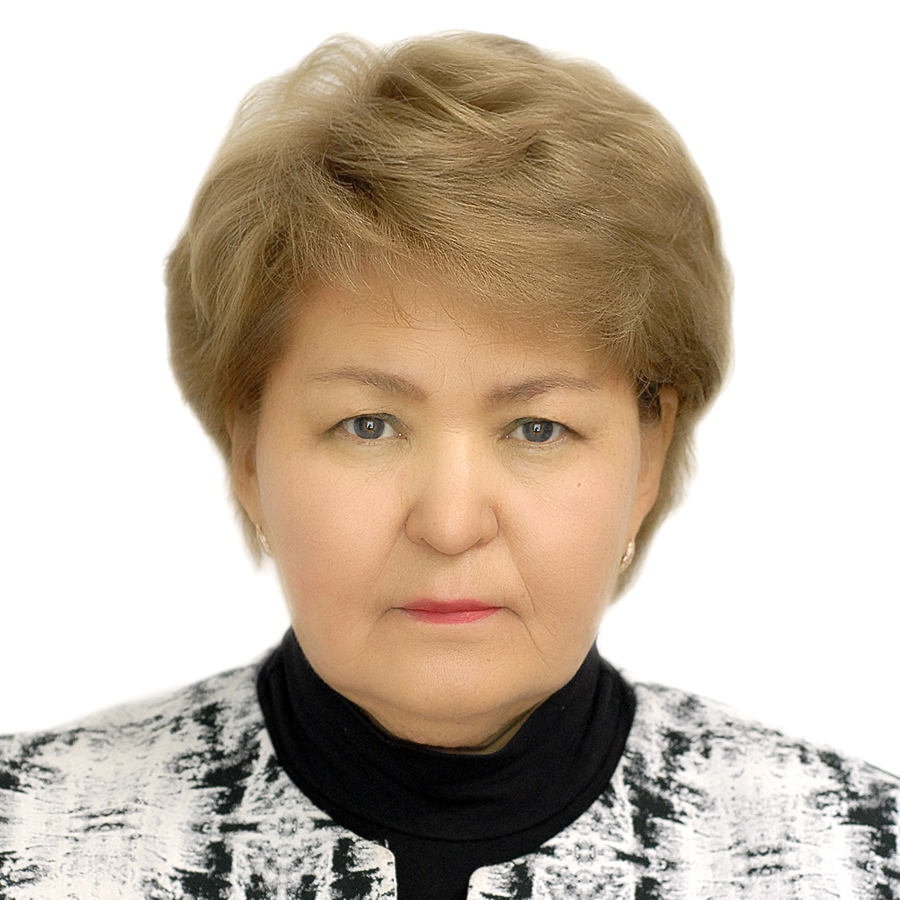
Main Teachers Toxanova Aigul

Toxanova Aigul


Professor
The Department of «Economics and business»

Doctore of economics sciences

email: t.nurpeisovna@metu.kz


Professional experience

2021 - to the present day. Professor of the Department of Economics and Business of the International University of Engineering and Technology

2012 – 2021 - Professor of the Department of "Economics" of the Kazakh University of Economics, Finance and International Trade, Head. Laboratory of Public-private Partnership

​​​​​​2008 - 2012 - Vice-President of JSC "Institute of Economic Research", Chairman of the Executive Body of the Association "Eurasian Economic Club of Scientists"

2007 - 2008 - Director of the Macroeconomics Department of JSC "Institute of Economic Research"

2003 - 2007 - Professor of the Department of Management and Marketing of the Kazakh University of Economics, Finance and International Trade

1996 - 2003 - Vice-Rector for Academic Affairs of the Kokshetau Institute of Economics and Management, Head of the Master's Degree program

1992 - 1996 - Head of the Department of Economics and Production Management of the Kokshetau branch of the Karaganda Polytechnic Institute

1987 - 1992 Associate Professor of the Department of Economics, Organization and Production Management of the Rudnensky Industrial Institute

Education

1978 - 1983 Sergo Ordzhonikidze Moscow Institute of Management. diploma with honors of an engineer-economist in the organization of management in construction (Moscow).

1984 - 1987 Sergo Ordzhonikidze Moscow Institute of Management (Moscow). Defense of a dissertation for the degree of Candidate of Economic Sciences.

1998 - 2000 L.N. Gumilyov ENU. Defense of the dissertation for the degree of Doctor of Economics.

Scientific interests

Образовательный проект «Внедрение системы обеспечения качества в высшем образовании через сотрудничество вузов, бизнеса и государства» («EDUQUS»). Срок реализации проекта 2018-2021 годы. 

Научный руководитель проектов в рамках грантового финансирования по линии МОН РК, 2015-2017 годы по следующим темам:

1) Развитие механизмов государственно-частного партнерства в приоритетных отраслях форсированного индустриально-инновационного развития
2) Развитие механизмов государственной поддержки инновационного предпринимательства

Научная стажировка в Baylor University (США, Техас) по программе Фулбрайта (1997-1998), (2006)

2006 г.; 2016 - Дважды «Самый лучший учитель»


Publications

314 scientific papers and publications, including 7 in the Scopus database:

1.Development of Public-Private Partnership in the Republic of Kazakhstan // IEJME — Mathematic Education, 2016, VOL. 11, NO. 5, 1113-1126 // http://iejme.com/makale/540

2.Government Support of Innovative Business in the Republic of Kazakhstan // IEJME — Mathematic Education, 2016, VOL. 11, NO. 5, 1033-1049, http://iejme.com/arsiv/136

3. Innovative Entrepreneurship Financing in the Republic of Kazakhstan // Journal of Applied Economic Science, Volume, Issue, 2017  (Romania) Volume XII Issue 3 (49) Summer 2017, pp. 875-892

4. Public-Private Partnership Development Specifities in the Republic of Kazakhstan // Journal of Applied Economic Science, Volume, Issue, 2017  (Romania) Volume XII Issue 4 (50) Summer 2017, pp. 1048-1063

5.“Evaluating of the Effectiveness of Public-Private Partnership Projects in the Republic of Kazakhstan with the Analytic Hierarchy Process” // Journal of Applied Economic Sciences, Volume XIII, Issue 6(60), Fall 2018

6. Development of Innovation Infrastructure of Energy Complex Enterprises  //Industrial Engineering & Management Systems, Vol 19, No 1, March 2020, pp.120-132

7.  Effective methods of rational water resource use in the agrarian sector of Kazakhstan // Scientific Horizons, 2024, Vol. 27, No. 12, 27(12), 90-102. https://sciencehorizon.com.ua/en

     23 publications in KKSON journals:
1. Priority directions of state support of innovative entrepreneurship in the Republic of Kazakhstan // "Economics: strategy and practice", No. 2, 2017, pp. 23-30
2. Strategic issues of manufacturing industry development in the Republic of Kazakhstan // KarSU Bulletin, No. 1, 2019
3. Indirect measures of state support for innovative entrepreneurship // Economics and Statistics No. 1, 2019. - pp.109-114
4. Kazakhstan Republikasyndagy memlekettik – zheke aryptestikti damytudyn keleshegi // Statistics, accounting and audit, No. 4 (71), 2018 - pp.112-116
5. Cluster approach in modernization of textile industry of Kazakhstan // Bulletin of Turan University, No. 4 (80) 2018 Almaty – pp.41-46.
6. Methodology for evaluating the quality of the predictions of consumer demand and volumes of mineral-raw material resources production // Izvestiya NAS RK, No. 1, 2019.
7. Development of public-private partnership in the textile industry Kazakhstan // Statistics, accounting and auditing. – Almaty: Rosa Publishing and Printing Center. No. 1 (72). 2019. – pp. 191-195
8. Management of financial and industrial corporate structures: foreign experience and Kazakhstan // Statistics, accounting and auditing. Almaty: №2(73), 2019. - Pp.208-213
9. The governmental support of the light industry in modern integration condition // Bulletin of Karaganda University. – Karaganda: Publishing house "KarSU im.Buketova", №2(94). 2019. - Pp.240-246.
10. Organizational and Economic Mechanism of Support and Development of the Financial –Industrial Groups in the Mineral and Raw Materials Sector of Kazakhstan // Reports of NAS RK, No.2, 2019. – C.93-98
11. System analysis of the goals of integration of corporate structures // Reports of the National Academy of Sciences of the Republic of Kazakhstan, No. 6, 2019.
12. Entrepreneurship Development Concept // Izvestiya NAS RK, No. 5(327), September –October, 2019, pp. 213-217
13. Analysis of the effectiveness of innovation activity in the countries of the Eurasian Economic Union//Bulletin of KazNU named after al-Farabi. Economic Series, 2018 - №4(126). – Pp. 35-51.
14. Mechanisms of Formation and Management of Financial-Industrial Groups in Kazakhstan Izvestiya NAS RK, No. 1(323), 2019, pp.106-112
15. Factors influencing the innovative development of the enterprise. Bulletin of KazUEFMT, No.2 (39), 2020, pp.41-50
16. Methods of calculating temporary differences and problems of their recognition // Statistics, accounting and auditing. Almaty, 3(78)2020.- pp.45-50
17. Development of accounting and tax policy: models of valuation and accounting of fixed assets. Bulletin of the University of Turan No. 4(88) 2020 .
18. Development of mechanisms for financing innovative entrepreneurship in the Republic of Kazakhstan // Bulletin of ENU, No. 3, 2020, pp. 68-80
19. Structural shifts in the manufacturing industry of Kazakhstan // Central Asian Economic Review NARXOZ University, No.4 (133), 2020, pp. 54-66
20. Evaluation of Innovation Infrastructure in the Republic of Kazakhstan
Assessment of innovation infrastructure. KazUEFMT Bulletin, No. 1 (42), 2021, pp.14-21
21. Development of public-private partnership in the transport infrastructure of the Republic of Kazakhstan. Bulletin of ENU, Economic Series, No.1,2022, pp. 19-31

22. Public-private partnership as a tool for sustainable tourism development in the Republic of Kazakhstan" // "Statistics, Accounting and Audit", No. 1 (96) 2025, pp.269-282.

23. Mechanisms of state support for innovative entrepreneurship (on the example of bakery production) // Bulletin of KazUEFMT, No. 4, 2025, pp. 339-348

Disciplines taught


Small and Medium Business Management

The discipline "Management of small and medium-sized businesses" is aimed at familiarization with the basic theoretical provisions of modern entrepreneurship, as well as business management tools at various stages of the life cycle of a small enterprise; - study of methods for substantiating entrepreneurial ideas and market research, as well as business planning in the activities of small enterprises. As a result of studying the discipline should: to know: the legal foundations of the organization of small enterprises, the concept and types of transactions in business, the system of state registration of enterprises and licensing of certain types of activities; the organizational and economic mechanism of functioning of small enterprises, types of responsibility in entrepreneurship; principles and methods of planning socio-economic development, and justification of management decisions; methods of calculating the modern system of indicators of economic and financial activities of small enterprises; methods of assessing the effectiveness of small enterprises; experience of leading domestic and foreign companies in the field of small business management; be able to: use the information obtained as a result of marketing research; identify and describe the characteristics of the main elements of the organization of small business activities; detect the multifactorial impact of the environment on the organization of small business; choose approaches to designing the optimal structure of a small enterprise taking into account the prevailing conditions and environmental impact; to form a system of indicators to assess the resource potential and performance of a small enterprise; to interpret statistical data on economic processes and phenomena, to use the results of the analysis of the activities of small enterprises to improve its activities. possess: - skills of evaluating the performance of small business organizations and identifying reserves for its improvement.

Regional economy

The course is aimed at studying the features of socio-economic processes and their management at the regional level. As a result of studying the discipline, students will master the essence of regional reproduction processes, the principles of regional economic policy in the country and abroad; will be able to analyze the state of economic, social, demographic, environmental processes at the level of different regions; will master the methods of statistical analysis of the main macro-economic indicators of regional development

State Regulation of Economy

The course is aimed at studying the methods of state regulation of the economy by students, mastering the basic principles of ensuring the economic development of the country and state regulation of the economy, mastering information about the relationship and dynamics of national production, inflation, employment and other areas of economic policy.

The state sector of the economy

The course is aimed at studying the public sector of the economy and the mechanisms of managing socio-economic relations. As a result of studying the discipline, students will master the basic principles of ensuring the economic development of the country and state regulation of the economy, find out the strategic directions of the development of the national economy and institutional structure, determine the main directions of interaction of the public sector with other economic agents in order to increase the efficiency of the functioning of the economy

The state sector of the economy

The goal is to know about the economic resources with the help of which state regulation of the economy is carried out. As a result, to know about the public sector of the economy and the mechanism of its management of socio-economic relations, the basic principles of ensuring the economic development of the country, foreign economic regulation, increasing investment attractiveness, etc.

Economy and organization of small and medium business

The discipline "Economics and organization of small and medium-sized businesses" considers the necessary amount of modern theoretical and practical knowledge in the field of small and medium-sized business economics and teach them practical methods of performing various analytical and economic calculations. As a result of the study , the student must: To know: нормативно regulatory legal acts and laws regulating the activities of a small and medium-sized business entity; calculation methodology and composition of the main indicators characterizing the activities of small and medium-sized businesses; methods of supporting small and medium-sized businesses in the region. Be able to: обоснов justify the choice of effective economic measures and projects; calculate the main indicators characterizing the financial and economic activity of a small or medium-sized business entity; calculate tax liabilities of organizations and small and medium-sized businesses Own: Skills to analyze and interpret financial, accounting and other information contained in the reports of small and medium-sized enterprises of various forms of ownership and use the information obtained for making management decisions ; skills of using modern technical means and information technologies to solve analytical and research problems

innovative business

The course is aimed at a comprehensive study of innovative entrepreneurship. As a result of studying the discipline, students will master the methods of development management, the specifics of planning and organizing innovation activities, will understand the basic principles of innovation business, directions of development and effective management, which will allow them to form innovative thinking in practice in the field of innovation process management

World Economy and International Economic Relations

The discipline "World Economy and international economic Relations" forms theoretical knowledge about current trends in the development of international economic relations and practical skills in analyzing complex phenomena in world economic relations in the context of the globalization of the world economy. As a result of the study should: To know: - the main microeconomic categories necessary for the analysis of the activities of economic agents at the micro level; - the main macroeconomic categories necessary for the analysis of the activities of economic entities at the macro level; - the system of state regulation of the economy; - the main patterns of behavior of macroeconomic agents . Be able to: - independently analyze the economic reality and the processes taking place in the economic system of society; - to collect primary statistical data on the state of the economy on the basis of publications; - make economically sound decisions in specific situations. Own: - skills of using modern microeconomics tools to analyze microeconomic interactions, methods of constructing and applying microeconomic models to assess the state and forecast the development of economic phenomena and processes - skills of using modern macroeconomics tools to analyze macroeconomic interactions, methods of constructing and applying macroeconomic models to assess the state and forecast the development of economic phenomena and processes; - forms and methods of state regulation in the national economy

International Economics

The course is aimed at studying the theoretical and practical issues of the world economy and international economic relations based on the international division of labor. As a result of studying the discipline, students master the skills of forming a strategy for the development of the national economy on the world stage, analyze the values and trends in the development of the world economy; form the skills of solving the problems of the international economy and the production of goods for the world markets of the organization

Tourism resources in KZ (in English)

The course is aimed at studying the main approaches and methods of integrated geographical research, including geographical zoning, theoretical and scientific-practical knowledge of the basics of environmental management. As a result of studying the discipline, students will use tools and technologies for analyzing tourist and recreational needs and choosing types of recreational and tourist activities, taking into account the uniqueness of the territorial recreational systems of the country and the world against the background of globalization processes in world tourism.

Innovative economy

The course is aimed at forming students' systematic understanding of innovation and innovative business development, competencies for managing the innovative development of economic systems. As a result of studying the discipline, students will master the theoretical foundations of innovation processes, concepts and characteristics of innovations and their impact on economic development, promising directions for the use of innovations in the economy

Integration and the international economy

The course is aimed at studying global commodity markets, international business and entrepreneurship. As a result of studying the discipline, students will master the methods of forecasting the conjuncture of the world market of goods and services, modern international business; the methodology of selecting countries and markets for conducting international business; will be able to explore the problems of international trade and international economic integration, as a process of economic interaction of countries, leading to closerintegration, interpenetration of national farms into a single system of economic relations

Theory and organization of production

The course is aimed at developing the student's practical skills in organizing production in professional activities. The content of the course includes such issues as the basic laws, principles and methods of organizational activity, designing organizational systems and structures, features of the organization of service and entrepreneurial activities, logistics methods in the organization, as well as practical issues of organizing production, creating organizational and economic systems and ways to improve them at enterprises.

Organization and planning of scientific research

The course is aimed at developing the student's professional competencies in the organization and planning of scientific research. The content of the course includes such issues as the methodology for conducting theoretical and experimental research, searching and processing information, conducting experiments and processing their results using modern software packages, developing and formulating research results, processing research results.

Institutions of functioning of economic systems

The course is aimed at obtaining theoretical knowledge on the development of institutions for the functioning of economic systems. The content of the course includes such issues as economic growth and the pace of its development, the cyclical nature of the economy, the level of employment and unemployment problems, the price level and inflation problems, issues of money circulation and the state budget, formation of the economic policy of the state based on the analysis of economic parameters and macro indicators and assessment of the level of competitiveness

Cluster development of the national economy

The course is aimed at developing masters' skills in creating a cluster form of economic space organization. The content of the course includes such issues as the features of cluster development of the national economy, the definition of the role of clusters as the basis for stimulating innovation, improving the competitiveness of cluster enterprises and calculations of economic indicators of subjects of the cluster economy using information technology.

Economics of innovation and technology business

The course is aimed at developing a system of knowledge about modern approaches to creating innovations in the master. The content of the course includes such issues as the economic foundations of innovative business and its functioning in the macro and microeconomic environment, the use of tools for planning and evaluating innovations, building appropriate business processes and the direction of innovative activity in order to diversify the business

Research and commercialization

The discipline is aimed at developing students’ analytical and research skills necessary for conducting scientific and technological activities and their commercialization. The course covers methods for analyzing the results of R&D for business use, assessment of technological opportunities, research management, implementation of innovations in production, and strategies for the commercialization of scientific achievements.

Innovative business

The purpose of studying the discipline is the development by students of a comprehensive understanding of innovative entrepreneurship, its methods of managing developments, the features of planning and organizing innovative activities. As a result, the student will master the basic principles of the innovative business, its development and effective management, and form innovative thinking on practices in the field of innovation process management.

Innovative business development

The purpose of the discipline is to form the student's entrepreneurial competence, which determines the ability to turn innovative ideas into practice. The course provides a comprehensive understanding of innovative entrepreneurship, using economic and mathematical research methods. As a result of the training, the student will be able to plan and manage projects in innovative business development, as well as evaluate the effectiveness of the developed innovative projects.

Structural and technological diversification of the economy

The course is aimed at studying the economic mechanism for diversifying the economy of the real sector. The content of the course includes such issues as methods of structural transformation of the economy of the real sector, taking into account the search for new promising areas of development; priority directions of investment activity, expansion of the range, creation of new goods and types of production; factors for increasing competitiveness in the context of diversification

State Regulation of Economy

The purpose of the discipline is to form students' theoretical knowledge and practical skills in the field of state regulation of the economy. The course studies methods of state regulation of the economy, structural, innovation, investment policy, social policy of the state and employment regulation, financial and economic methods of state regulation, foreign economic activity and monetary policy, monetary, fiscal policy and regulation of the financial sector.

Green Entrepreneurship and Innovation

The goal of the course is to equip graduate students with knowledge and skills in sustainable development, environmental innovations, and green entrepreneurship, considering the specifics of software engineering, biotechnology, and real sector economics. The course explores modern approaches to building environmentally oriented business models, implementing digital and biotechnological solutions, and developing interdisciplinary projects aimed at sustainable development in the real sector.

Timetable of classes

Opening lessons