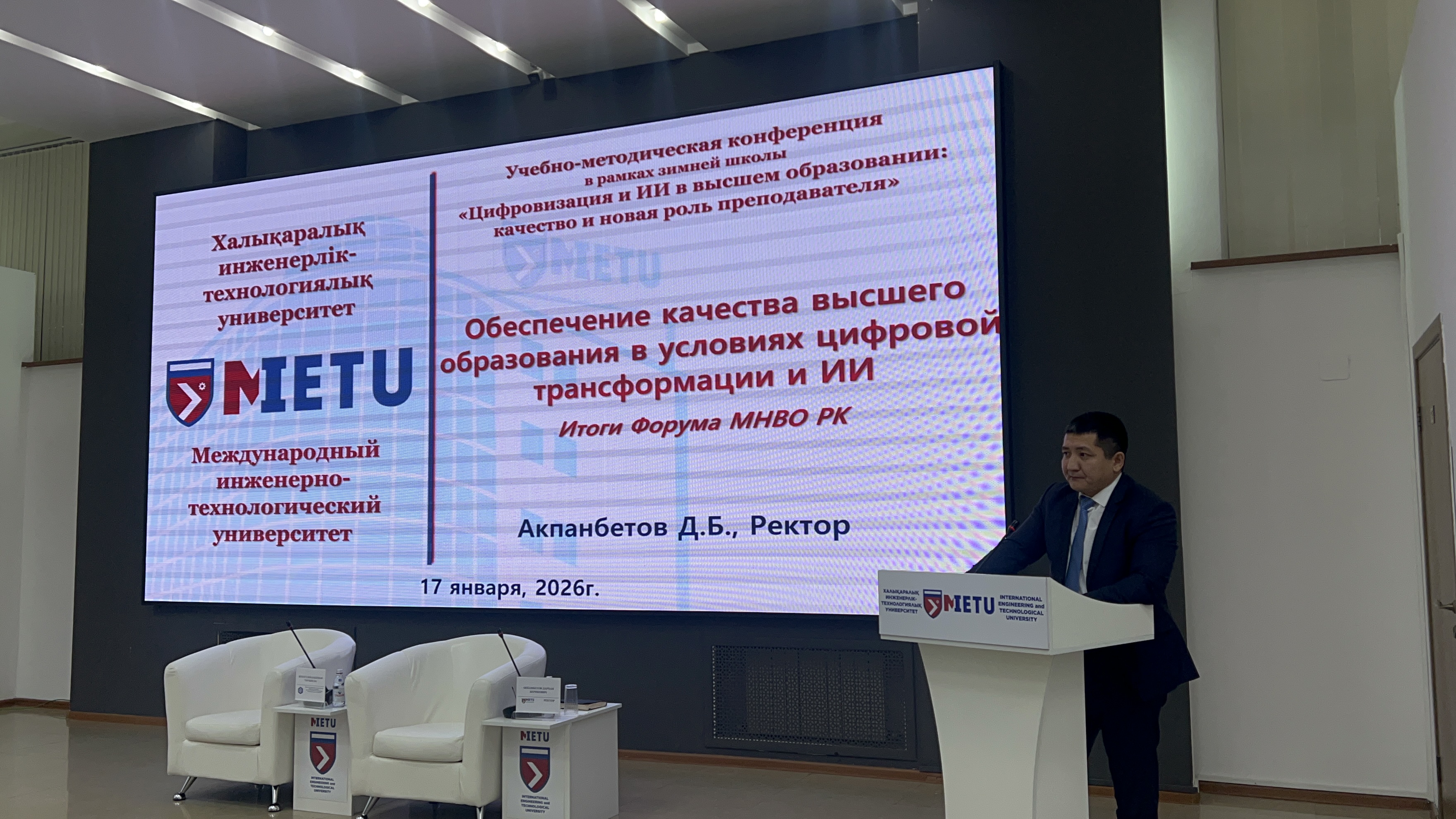
METU Winter School–2026: "Digitalization and AI in Higher Education: Quality and the Teacher`s New Role"
The Head of State has declared 2026 the Year of Digitalization, emphasizing the strategic importance of integrating advanced technologies into the higher education system. In alignment with this initiative, the International University of Engineering and Technology (METU) hosted the Winter School–2026 educational and methodological conference from January 12 to 17, 2026, focused on "Digitalization and AI in Higher Education: Quality and the Teacher`s New Role."
Throughout the week, university departments held individual breakout sessions in their respective fields. The work focused on:
Digitalization and the implementation of Artificial Intelligence in the educational process;
Updating educational programs to meet 2026 market demands;
Improving the quality of higher education and professional retraining for faculty members.

On January 17, 2026, a final plenary conference was held to present the consolidated results of all departments. Key presentations were delivered by:
Darkhan Akpanbetov, Rector of METU: "Digitalization and AI in Higher Education";
Assel Abdildaeva, Vice-Rector for Academic Affairs and International Relations: "Digitalization and AI in Higher Education: Quality and the Teacher`s New Role";
Oxana Karuna, Vice-Rector for Science, Innovation Policy, and Marketing: "AI as a Co-author in Science: Transforming Research Practices";
Zhulduz Dildebaeva, Head of the Economics and Business Department: "Student Entrepreneurial Mindset in the AI Era: From Data Analysis to Value Creation";
Saule Kazybaeva, Associate Professor, Ph.D. in Agricultural Sciences: "Teaching Methods for `Viticulture` with AI Elements."
Following the conference, METU adopted a Resolution establishing key conclusions and recommendations for the further integration of AI technologies into the educational process.
Winter School–2026 served as a productive period for the METU staff to exchange experience and develop unified approaches to modernizing higher education. This event confirmed the university`s readiness for large-scale digital challenges and laid the foundation for the continued improvement of specialist training quality.