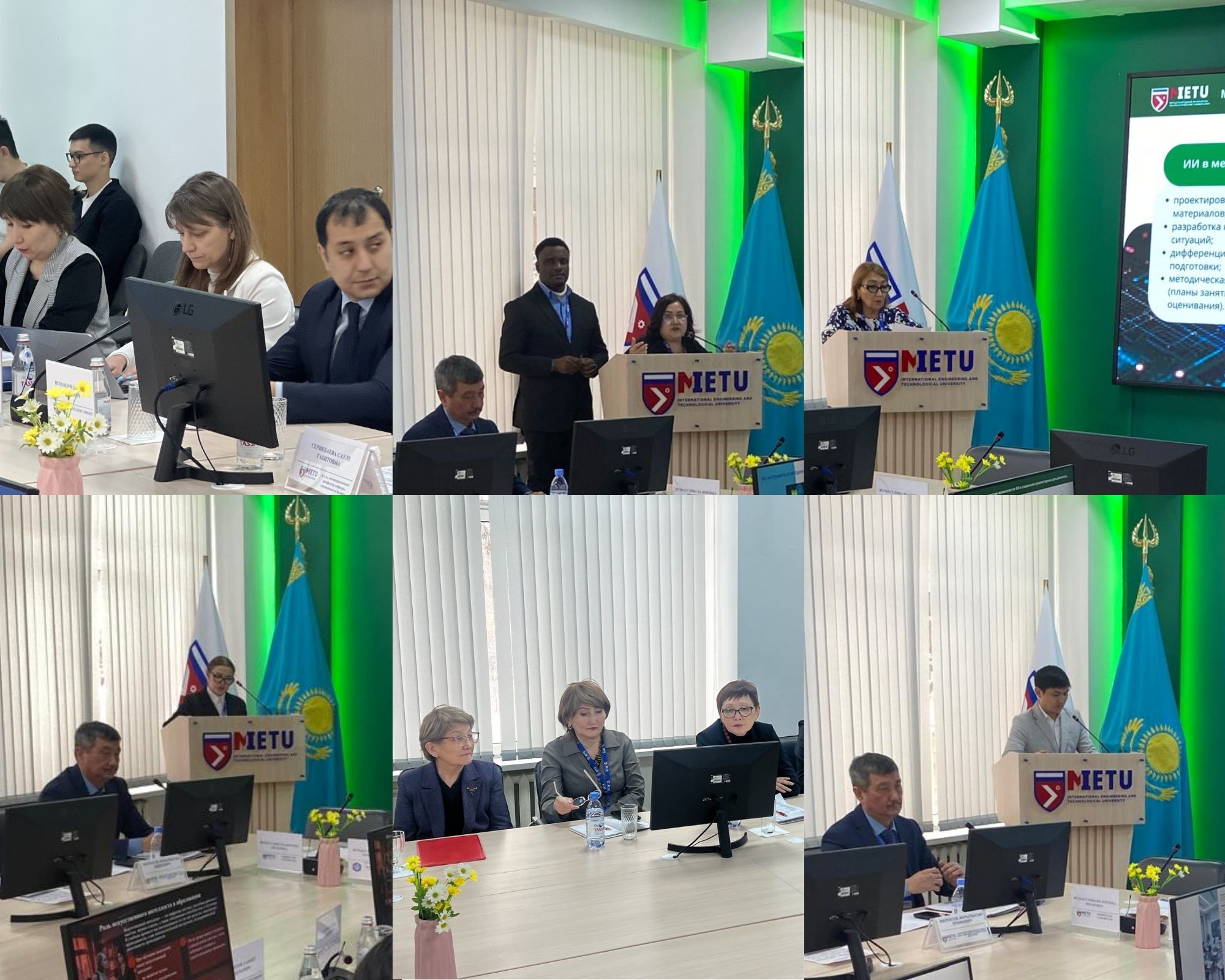
“Digitalization and Artificial Intelligence in Higher Education: Quality and the New Role of the Teacher” Educational and Methodological Conference within Winter School -2026
From January 12 to 17, 2026,
as part of Winter School2026, an educational and methodological conference on “Digitalization
and Artificial Intelligence in Higher Education: Quality and the New Role of
the Teacher” was held. The
conference was actively attended by faculty members of the Department
of Social-Humanitarian Disciplines and World Languages.
During the event, scientific and
methodological reports were presented, focusing on the application of
artificial intelligence in the teaching of languages and social-humanitarian
disciplines.
The following scientific and methodological
reports were presented at the conference:
·
Zhappasov
Zharlykhasyn, candidate of historical sciences, associate professor,
head of Department — “Methodology of
Adaptive Teaching of Languages and Social-Humanitarian Disciplines Based on
Generative AI Models”.
·
Aitkulova
Kuralay, master of pedagogical sciences, lecturer — “Innovative Methods and Forms of
Teaching a Foreign Language”.
· Nurmoldaev
Daryn, master of pedagogical sciences, lecturer — “Artificial Intelligence as the Basis of
an Adaptive Model for Teaching Russian”.
· Tebegenova
Altynaray, candidate of philological sciences, Phd, associate professor — “Effectiveness of Applying Artificial
Intelligence Technologies in Kazakh Language Lessons”.
· Shaimukhanova
Saule, candidate of historical sciences,
associate professor — “Artificial Intelligence as a Tool for
Teaching Social-Humanitarian Disciplines”.
· Olzhashov Aydyn, master
of philosophical sciences, lecturer
— “Application of Artificial Intelligence Technologies in the Philosophy
Course”.
Based on the results of the conference,
participants noted the significant potential of artificial intelligence to
improve the quality of education, enable personalized learning, and emphasized
the necessity of developing the digital competencies of educators. The
conference served as a platform for exchanging scientific and methodological
experience and discussing the prospects for further integration of digital
technologies into the university’s educational process.