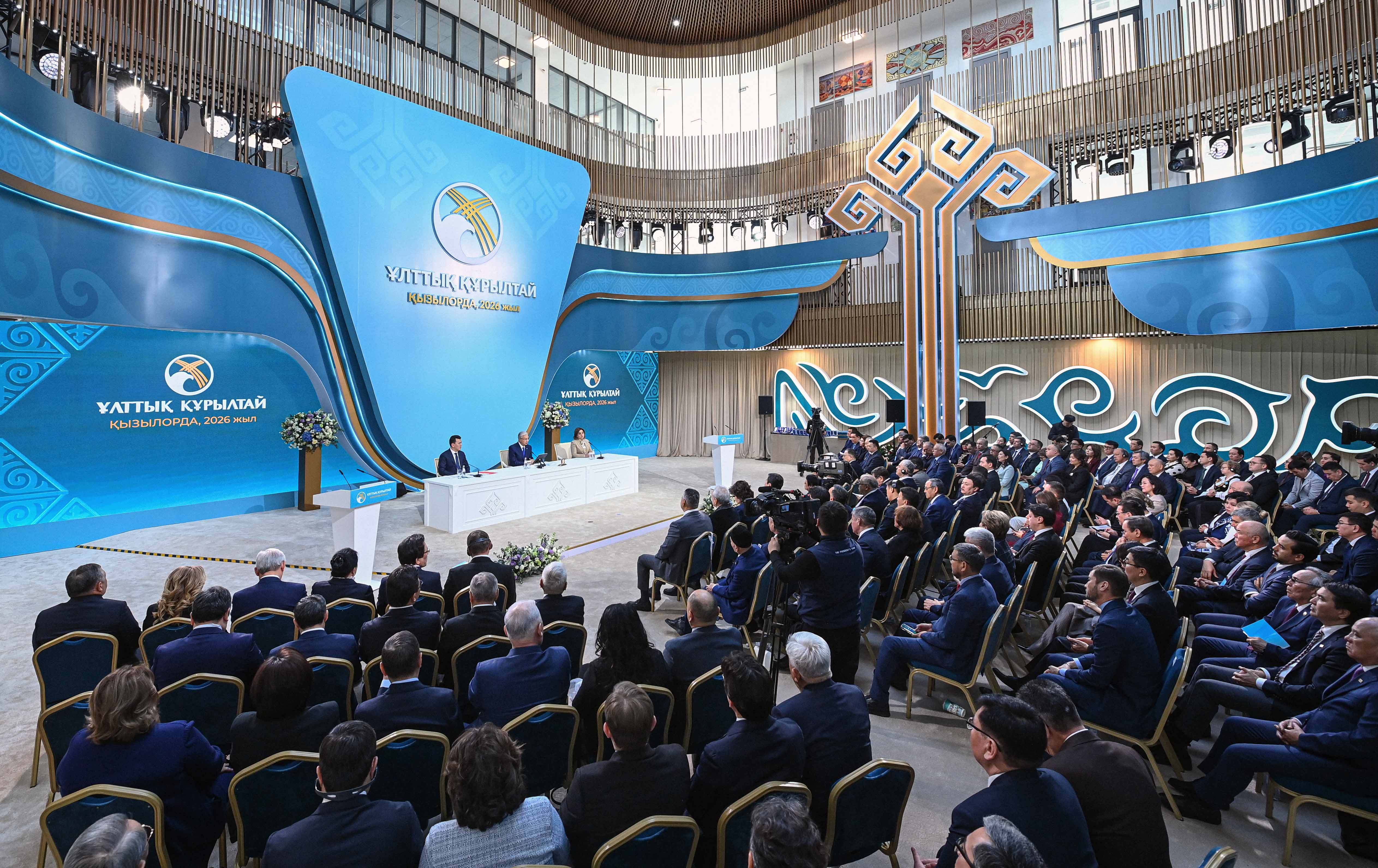
The Fifth National Kurultai: Education, Science, and Historical Consciousness as Pillars of Kazakhstan’s Strategic Development
On January 20,
2026, the Fifth Meeting of the National Kurultai was held in the city of
Kyzylorda under the chairmanship of the President of the Republic of Kazakhstan,
Kassym-Jomart Tokayev. Alongside defining the
country’s key strategic development priorities, the meeting comprehensively
addressed issues related to higher education, science, historical
consciousness, and the effective use of modern technologies in public policy.
The Kurultai platform was distinguished by its integrated approach, viewing
these areas not in isolation but as an interconnected system. As noted by the
Head of State, education, science, history, and technology form the foundation
of Kazakhstan’s long-term intellectual, institutional, and value-based
development.
The modernization of the education system was
addressed in substantive terms during the meeting. The President emphasized
that the quality of education should not be assessed solely through material
infrastructure or formal indicators, drawing particular attention to the
importance of education, values, and the formation of historical consciousness
within the educational process. In this context, the role of the
humanities—particularly history—within higher education was highlighted. It was
explicitly stated that the purpose of historical education extends beyond
recounting past events and should contribute to fostering social
responsibility, legal culture, and civic engagement.
Issues related to science constituted one of the core
substantive pillars of the National Kurultai. The President stressed the need
to regard science as a strategic resource for national development and
underscored the importance of enhancing systemic approaches to supporting
scientific research. In this regard, the adoption of the concept for developing
scientific hubs was presented as a significant step toward integrating science
and higher education. These initiatives were noted for their potential to
strengthen university-based research, develop research infrastructure, and
provide institutional support for young scholars. The openness of science to
society and its orientation toward concrete development objectives were
identified as key guiding principles.
The meeting also extensively covered issues related to
modern technologies, including digitalization and artificial intelligence. The
President highlighted that technological transformation has a direct impact on
education and science, emphasizing the need for responsible and targeted use of
digital solutions and artificial intelligence tools. The application of
artificial intelligence in education, scientific research, and governance
systems was considered an important component of overall national development.
It was noted that digital technologies enhance access to education and science,
improve the quality of data processing, and enable the introduction of new
methods of scientific analysis. At the same time, the President emphasized that
technology alone cannot resolve deficiencies in governance and must be
accompanied by improvements in managerial culture.
These approaches are of particular importance for
higher education institutions and the academic community. Within the framework
of the Kurultai, universities were viewed not only as educational institutions
but also as key components of the scientific and innovation ecosystem. As
emphasized by the President, higher education institutions face the tasks of
advancing scientific research, mastering new methods based on digital
technologies and artificial intelligence, and upholding principles of academic
integrity and scientific standards. Addressing these tasks is aimed at
improving the quality of university-based research and strengthening the
country’s overall intellectual potential.
The development of historical science and the
formation of historical consciousness were considered in close conjunction with
education, science, and technological advancement. The President emphasized the
necessity of ensuring academic rigor, reliance on primary sources, and
professional responsibility in the study and teaching of national history.
Expanding archival research, digitalizing historical data, and integrating such
materials into scholarly circulation were identified as key directions for the
development of historical science. These initiatives are intended to enhance
the academic quality of historical research and ensure broader public access to
historical knowledge.
In addition, the Kurultai addressed other aspects of
societal development. It was noted that strengthening the principles of the
rule of law, improving governance systems, and expanding civic dialogue are
directly linked to the development of education and science. High-quality
education and a strong scientific base were identified as essential
prerequisites for fostering legal culture, enhancing social responsibility, and
ensuring political stability.
Overall, the Fifth Meeting of the National Kurultai
held in Kyzylorda identified the development of education, science, history,
and modern technologies as strategic priorities for Kazakhstan. The positions
articulated during the meeting provide a substantive reference point for higher
education institutions and the academic community, reflecting the continuity of
state policy aimed at strengthening the country’s intellectual and
institutional capacity and defining its long-term development trajectory.