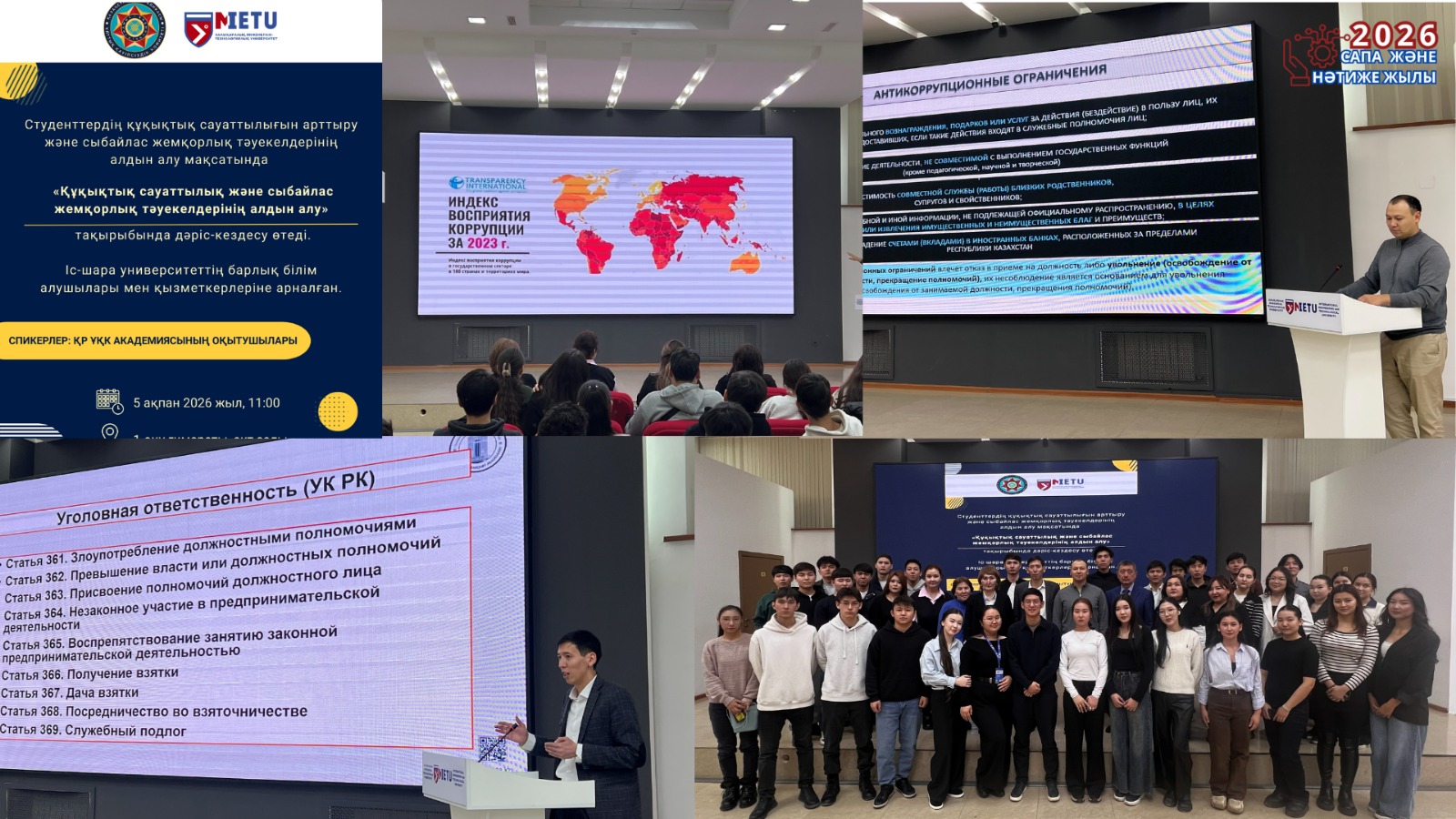
Lecture-Meeting on Legal Literacy and the Prevention of Corruption Risks
On February 5, 2026, an
open-format lecture-meeting was held at the university on the topic “Legal
Literacy and the Prevention of Corruption Risks,” targeting students and
faculty members. The primary goal of the event was to enhance students’ legal
awareness, foster civic responsibility, and explain the core directions of
anti-corruption policy. The session was delivered by invited experts from the
Academy of the National Security Committee of the Republic of Kazakhstan —
Azamat Didarovich Tazabekov and Aset Aidosovich Zhaulibekov — who conducted an
informative and engaging lecture.
During the meeting, the speakers
elaborated on the legal foundations of anti-corruption measures as outlined in
the current legislation of the Republic of Kazakhstan, including the Law “On
Combating Corruption,” as well as relevant articles of the Criminal Code and
the Code of Administrative Offenses. Students were provided with comprehensive
explanations of the legal nature of corruption, its negative societal
consequences, mechanisms for early prevention, and the types of legal
responsibility applicable to corruption-related offenses — including
disciplinary, administrative, and criminal sanctions.
The presentation materials
included official statistics for the year 2024: 1,493 individuals were detained
for corruption-related crimes, and 486.5 billion tenge were returned to the
state. A substantial portion of these funds was allocated to social infrastructure,
notably the construction of 56 schools. The speakers emphasized the importance
of proactive prevention measures, legal monitoring mechanisms, and transparent
budgetary planning as critical pillars of the national anti-corruption
strategy.
Particular attention was given to the role of youth
in building a culture of zero tolerance toward corruption. The lecturers
stressed the need for systematic legal education, the integration of academic
integrity principles, and adherence to ethical standards within the educational
environment. Participants were introduced to official channels for reporting
corruption offenses, including call centers and digital platforms. Exemplary
initiatives such as “Anti-Corruption Volunteering” and “Pathway to Business”
were presented as successful models for promoting legal consciousness among
young people.
At the conclusion of the session,
attendees posed practical questions, which received detailed and legally
substantiated responses. The event was viewed as a productive forum for
dialogue between legal experts and students, supporting the development of
legal competence and a culture of lawfulness in higher education.
The lecture was organized by the Department of
Social and Humanitarian Disciplines and World Languages and the University’s
Youth Policy Department, who consistently carry out strategic tasks aimed at
fostering legal awareness and building a transparent, responsible educational
environment.