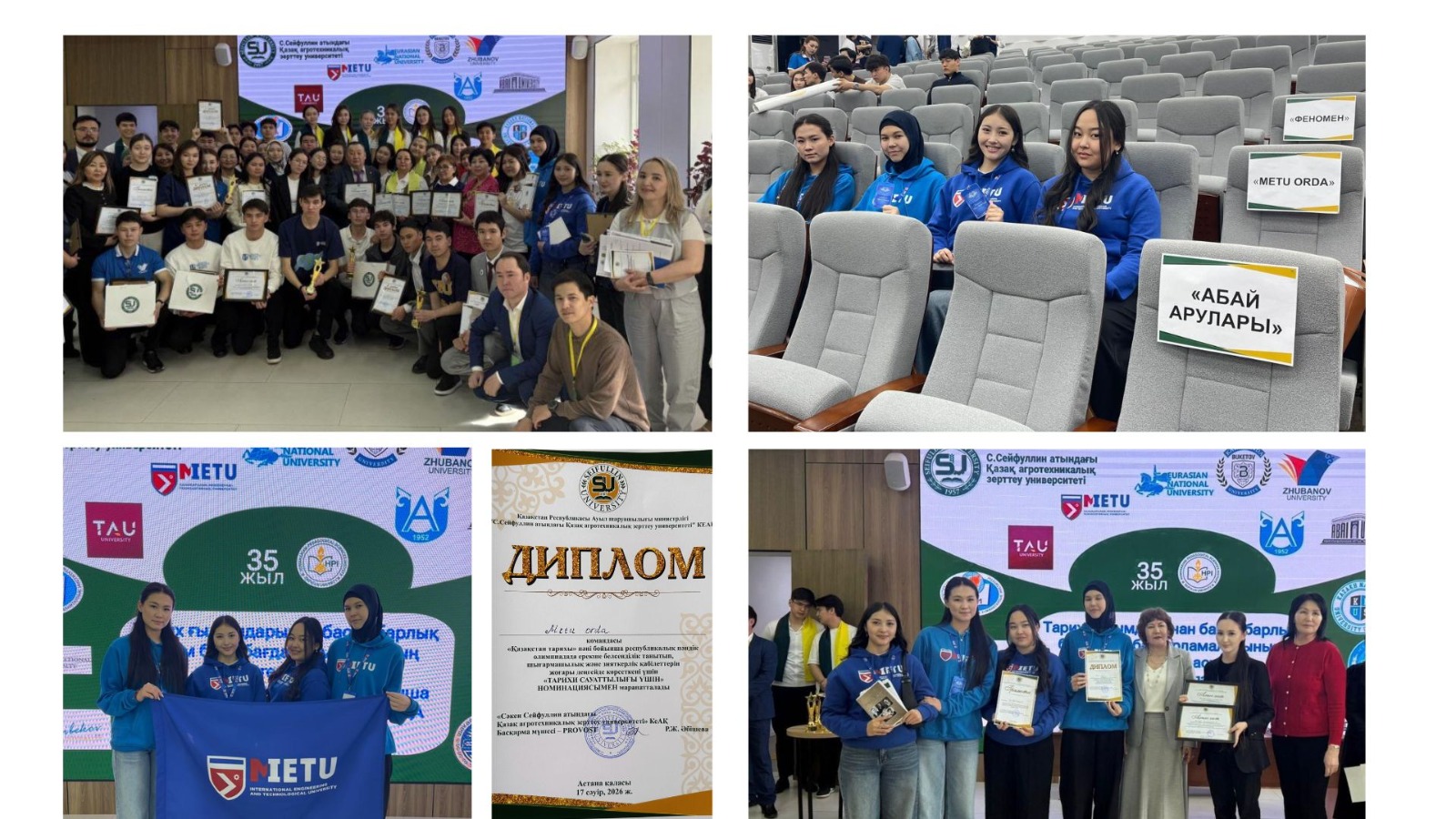
UNIVERSITY STUDENTS DEMONSTRATED HIGH ACHIEVEMENTS AT THE REPUBLICAN OLYMPIAD AMONG NON-HISTORY MAJORS
On April 17, 2026, the Republican Subject
Olympiad in “History of Kazakhstan” among students of non-history educational
programs was successfully held in Astana at the S. Seifullin Kazakh Agro
Technical Research University. The intellectual competition was organized in
cooperation with the Astana City Archive and the National Innovation Center
“Bilim-Orkenieti.”
This Olympiad stood out due to its unique
concept and format. It was the first large-scale national project conducted
within the framework of the compulsory “History of Kazakhstan” course, bringing
together students from non-history majors. Such approach enhances interdisciplinary connections in higher education and
broadens students’ historical awareness across various fields of study. The
main objective of the Olympiad was to increase students’ interest in the
history of Kazakhstan, stimulate their academic and research engagement, and
support the development of creative and intellectual potential among talented
youth. The event was also dedicated to the 35th anniversary of the Institute of
Humanities and Pedagogical Sciences, adding academic and educational
significance to the initiative.
Approximately 20 teams from leading
universities across the country participated in the
competition. Among them were L.N. Gumilyov Eurasian National University,
Abai Kazakh National Pedagogical University, Karaganda Buketov Research
University, Kazakh National University of Sport, Astana Medical University, Shakarim
University, Sarsen Amanzholov East Kazakhstan University, Aktobe Regional
University named after K. Zhubanov, Astana International University, International
Engineering and Technological University,
A.K. Kussayinov Eurasian Humanities Institute, and Turan-Astana
University. This confirms the high national status of the Olympiad and its
importance in strengthening academic cooperation among universities. The
Olympiad was conducted offline and consisted in four stages. During the “Presentation” stage, teams introduced themselves
creatively through video presentations with historical and patriotic themes.
The “Historical Dictation” stage assessed participants’ text analysis skills.
The “Captains’ Competition” evaluated knowledge and logical thinking, while the
“Recognize the Personality” stage required teams to identify historical figures
and provide comprehensive analytical insights about them.
Our university was represented by the
first-year student team “METU ORDA,” which respectively showcased its academic competence and
preparation. According to the results, all team captains received diplomas, and
scientific supervisors were awarded certificates of appreciation. Our team was
honored with the nomination “For Historical Literacy,” demonstrating a high
level of knowledge and intellectual capacity. This achievement is the result of
students’ systematic preparation, dedication, and the effective guidance of
faculty members. It also reflects the strong institutional support that
encourages students’ active participation in academic and intellectual
activities.
We express our sincere gratitude to the
Rector of the University Darkhan B. Akpanbetov
for comprehensive support in organizing the team and facilitating their
participation in this national-level competition. Such support plays a crucial
role in enhancing students’ professional development, competitiveness, and
overall quality of education. Participation in such Olympiads goes beyond
demonstrating academic knowledge. It plays a vital
role in shaping students’ outlook and personal development. Intellectual competitions
foster a strong motivation for learning, encourage continuous self-improvement,
and enhances key competencies such as teamwork,
communication, and responsibility.

Therefore, engagement in such educational initiatives
is an essential factor in developing students’ intellectual potential,
strengthening their civic identity, and ensure their
well-rounded personal and professional growth.