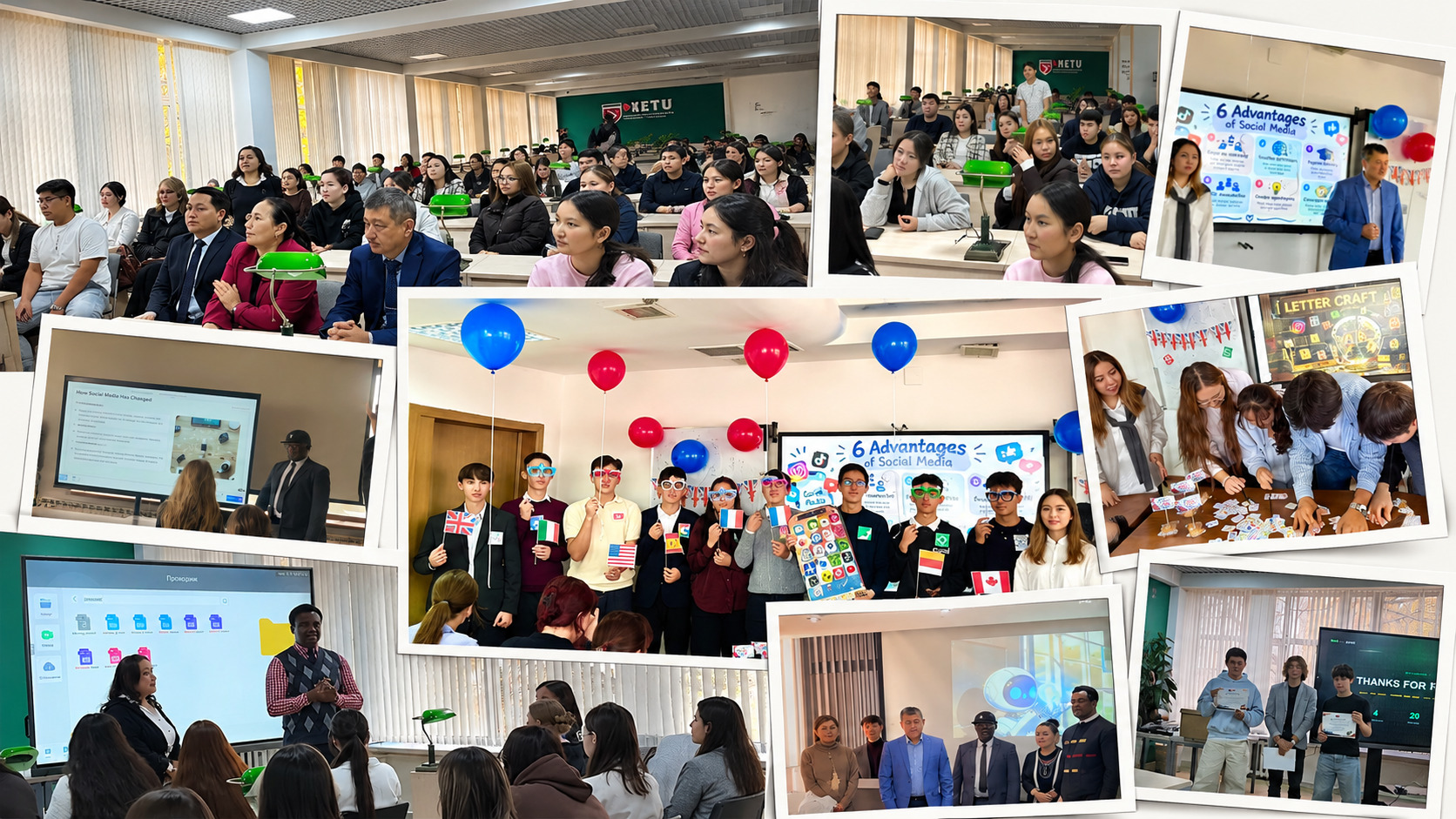
METU English Week 2026: Language, Creativity and International Opportunities
From 27 to 30 October 2026, METU
University hosted English Week 2026, organised by the Department of Social
Sciences and Humanities and World Languages. The programme brought together
students from different fields of study and featured presentations, debates,
intellectual games, video projects, thematic meetings and creative
performances. The main objective of the week was to provide students with
opportunities to use English in practice. They shared their experiences,
discussed current issues, presented their professional interests and worked on
collaborative projects. The variety of formats enabled participants to
demonstrate their abilities as speakers, discussion partners, content creators
and team members. The activities were prepared and conducted with the
participation of the department’s teaching staff: Kuralai Ongarovna
Aitkulova, Anyanwu Chukwuemeka Prince, Eleanya Nnanna Samuel, Dina Talgatkyzy
Beisegul, Anar Sisenbayevna Sisenbayeva, Lyailya Madibekovna Makhazhanova and
Sholpan Zhuniskhankyzy Torebek. The cultural and educational
dimension of the programme was represented by the “Language Fact”
round-table discussion conducted by Kuralai Ongarovna Aitkulova. Students
explored interesting facts about languages, watched videos about polyglots and
discussed the importance of learning foreign languages. References to the works
of William Shakespeare, Alexander Pushkin and Abai Kunanbayuly connected
language practice with literature and cultural heritage. Contemporary
communication was explored during the event “The Impact of Social Media on Real-Life
Communication,” conducted by Sholpan Zhuniskhankyzy Torebek.
Participants discussed how the digital environment is transforming everyday
interaction, what opportunities social media provides and why maintaining a
culture of direct communication remains important. The topic enabled students to
connect English-language practice with their personal experiences. On 28 October,
lecturer Dina Talgatkyzy Beisegul conducted an event entitled “The Impact of Social
Media on Human Life.” Students examined the positive and
negative effects of social media in English and communicated their ideas
through dramatised scenes and creative performances. The programme included
interactive games, educational tasks and visual materials prepared with the use
of artificial intelligence technologies. The event contributed to the
development of students’ linguistic and communication skills, critical thinking
and responsible attitudes towards the use of social media. Anar Sisenbayevna
Sisenbayeva and Lyailya Madibekovna Makhazhanova organised the interactive quiz
“Intellectual
Games,” which focused on video games, mobile applications,
board games and sports. Its team-based format combined language tasks with
intellectual competition. Students practised thematic vocabulary, developed
their listening comprehension and discussed their answers in English. On 29 October,
a meeting entitled “Student Life” was held with the Director of the
university’s Department of International Cooperation. The discussion focused on
student initiatives, academic mobility, international educational programmes
and the importance of English for participation in these opportunities.
Students shared ideas on how to make university life more meaningful,
strengthen mutual support and transform their proposals into collaborative
projects. At an event conducted by Eleanya Nnanna Samuel, participants
delivered presentations on the opportunities and potential risks of artificial
intelligence, the influence of social media, useful inventions, future careers
and the importance of learning English. The presentations were complemented by
role-plays and video interviews with teachers and students on the topics “Friendship”
and “My
University - METU in 2030.” The combination of prepared
presentations and interactive dialogue enabled students to use English to exchange
opinions and express themselves creatively.
Throughout the week, students also worked
on video presentations entitled “A Day in the Life of a METU Student”
and “Challenges
of University Life.” Through their own stories, they addressed
academic responsibilities, time management, communication and everyday
challenges. Producing the videos required collaborative work on content,
scriptwriting, spoken English and visual presentation. During the debates,
participants compared online and face-to-face learning and discussed the
advantages of living at home and in student accommodation. They were required
to construct arguments, listen to opposing viewpoints and respond to
counterarguments. These activities provided practical experience in public
speaking, attentive listening and respectful discussion. The presentation
topics covered Kazakhstan, METU University, the role of English in different
professional fields and the future of education. In “My University in 2036,”
students presented their vision for the future development of the university
environment. The presentations reflected the issues that matter to young people
and demonstrated how language education relates to their academic and
professional plans. The concluding event on 30 October, prepared with the
participation of English language teacher Anyanwu Chukwuemeka Prince,
brought together student presentations, debates and creative video projects.
Participants presented the results of their work and demonstrated their
readiness to address an audience, substantiate their opinions and support one
another. The practical outcomes of English Week 2026 included
student-produced videos and presentations, experience in teamwork and
opportunities to communicate in English through a variety of formats.
Participants engaged in both prepared presentations and spontaneous dialogue,
applying the vocabulary they had learned to familiar real-life situations and
current issues.
English Week reflects the strategic
priorities of the founder and leadership of the International Engineering and
Technology University, which focus on improving the quality of education,
strengthening language training and developing international cooperation.
Particular importance is attached to English proficiency as an essential
condition for students’ participation in academic mobility programmes,
international educational projects and professional collaboration. The week’s
activities contributed to the practical implementation of these priorities by
creating opportunities for students to develop their linguistic, communication,
digital and teamwork skills. The department expresses its gratitude to the
teaching staff for preparing and conducting the activities and to the students
for their initiative, creativity and active participation. English Week
demonstrated the value of regular speaking practice, collaborative projects and
the open exchange of ideas within the university community.
METU
English Week 2026 - Learn.
Speak. Create. Connect.